Horror Obby Stage Pacing and Tension Curves
Contrast and pacing, not constant scares, create real fear in horror games.
A horror obby that scares you at full volume from the very first stage is, oddly enough, one of the least scary things you can play. That's the central problem this piece is built around: the nervous system adjusts to whatever threat level it's handed, and once it adjusts, that threat level stops feeling like a threat. It just becomes the room temperature.
The obby format makes this worse than almost any other horror structure. Stages are short, they're discrete, and they stack on top of each other fast, so a designer who spends every chip on stage one has nothing left in the pot by stage five. Players either tap out from overload, or they go numb and keep clicking through stages without flinching, and both outcomes are the same failure wearing different clothes. Someone might argue that horror obbies exist to deliver constant scares, nonstop, end to end. The games that actually hold up under pacing scrutiny say the opposite: contrast is what makes a scare register as a scare, instead of fading into background noise you stop noticing by stage three.
Fear as a waveform: the rhythm that runs underneath every effective horror stage
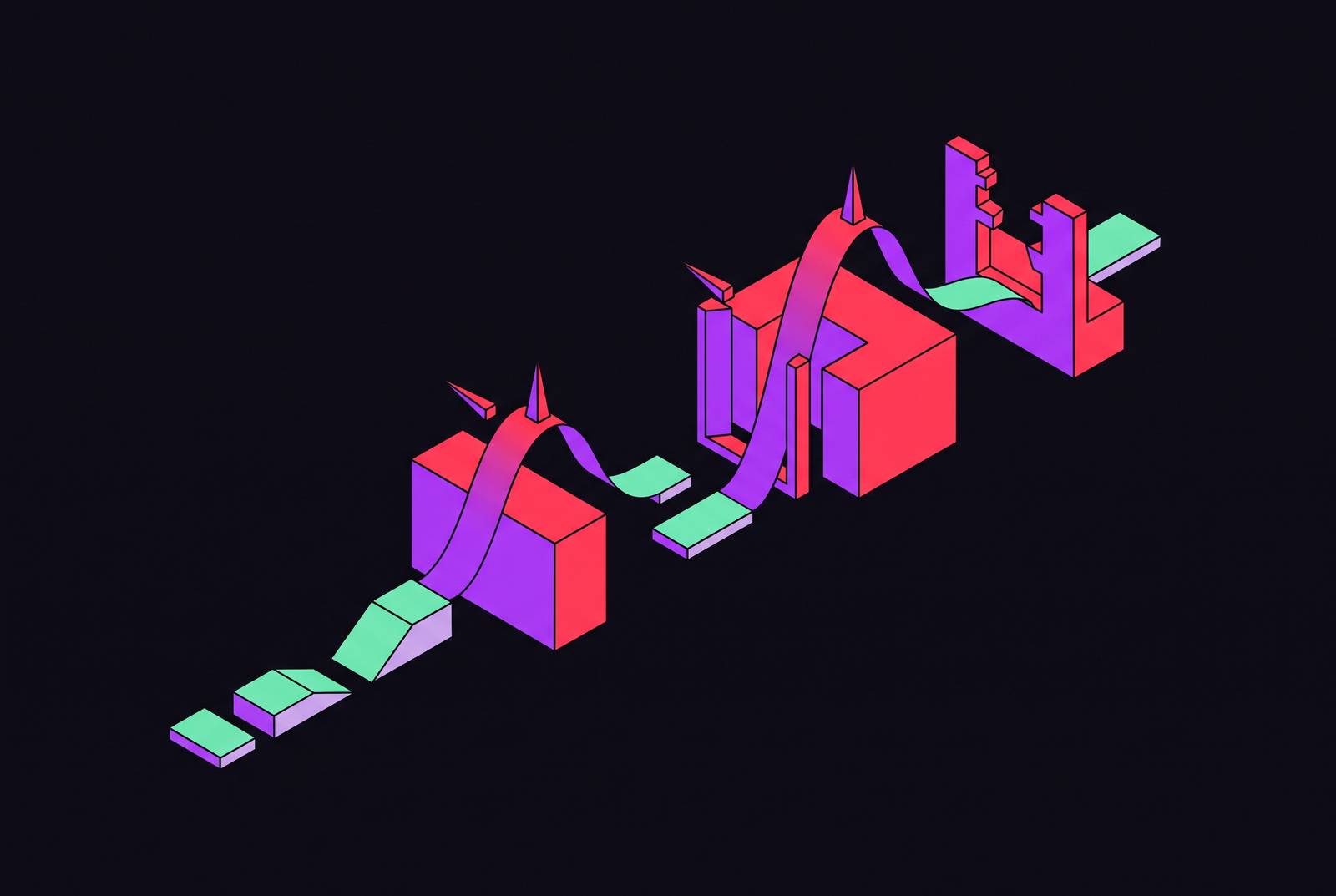
Good horror doesn't run like a flat line held at maximum. It runs like a waveform, with peaks and valleys, and a peak only works because of the valley sitting right before it. Without the dip, there's no climb, and the system that produces fear needs both halves of that equation to do its job.
The Lighthouse Keeper lays out four phases that make up one full loop: exploration, where the player just absorbs the atmosphere; build-up, where the screws start turning; release, the scare or the reveal that pays off the build-up; and valley, the recovery stretch before the next climb starts, and starts higher than the last one. Cutting the valleys out of that cycle removes the baseline the climbs rise above, so the climbs stop meaning anything. Applied to an obby, each stage can carry one phase of that cycle on its own, or it can run the whole loop in miniature, depending on how long the stage is and what the overall arc is trying to build toward.
The hardest discipline in stage design.
The calm stretches between scares are where dread quietly builds, and cutting them out removes the actual mechanism that makes the next peak land. The Lighthouse Keeper puts it directly: a valley is where the player rebuilds the tension that the next peak is about to spend. Skipping that rebuilding period means the next scare is spending money that was never in the account.
Waiting, it turns out, is a more sophisticated kind of fear than flinching. A quiet stretch in a game that has already taught the player that quiet doesn't last starts generating its own dread, with no jump scare required to do the work. In obby terms, a low-threat traversal stage, maybe just some ambient audio and no active danger, is the silence that makes the next loud moment audible.
Protecting that silence is harder than it sounds, because adding a scare always feels like progress and leaving a stage quiet feels like doing nothing. That instinct is exactly backwards. The common mistake is treating the valley as wasted real estate and stuffing it with minor threats "just to keep things interesting," which squeezes the whole game into one narrow, exhausting middle band where nothing is ever fully calm and nothing is ever fully terrifying either. Sound design makes the same point in miniature: a mix with no quiet passages has no loud ones either, just a wall of noise sitting at one volume the whole way through.
Safe stages and false comfort: the genre's most powerful structural tool, widely misused
A safe stage, the kind where the music softens, the threat backs off, and the player finally gets to exhale, is the structural device that makes the next descent into dread possible. The Lighthouse Keeper states the logic: you cannot frighten someone who is already frightened all the way to their ceiling. The player has to come down first before they can be sent back up.
That safe stage has to keep its promise, consistently, across most of the game. Comfort only works as a tool if it's reliable, because the player needs to believe, almost without thinking about it, that reaching the safe room means the danger actually stopped for a minute. There's exactly one legitimate way to break that promise: letting a safe stage fail, eventually, somewhere late in the run. It only works because every safe stage before it kept its word without exception. The betrayal lands hard precisely because the pattern earned the player's trust first.
For obby design, this translates into something concrete: a dedicated low-intensity checkpoint stage, built with warmer lighting, slower platforming, and almost no audio threat, tells the player they're allowed to reset. That's a gift to the player, not a concession the designer is grudgingly making. The failure mode on the other side is overusing the betrayal, making most safe stages secretly unsafe, which teaches players that nowhere is actually safe. At that point they stop decompressing anywhere, the dynamic range collapses, and the whole tool breaks.
Spatial layout and lighting as stage-level tension controls
Before any enemy shows up or any scripted event triggers, the shape of a stage is already telling the player how scared to be. Corridor width, sight lines, whether a room is symmetrical or just slightly off, where the light sources sit: all of it communicates threat level before anything actually happens, which makes spatial design a pacing tool in its own right, not just a backdrop for one.
Spatial disorientation works as a slow-burn mechanic on its own. Teach a player a layout, let them memorize it, then change one small thing, a door that wasn't there before, a hallway that now runs a little longer than it used to, and unease sets in before the player can even explain why. Lighting works as an emotional control. Darkness on its own isn't inherently scary. A flickering light source breeds distrust because the light itself can't be trusted, and once players stop trusting what they can see, they stop trusting anything in the room.
Light also works as misdirection. A well-lit area tells the player "safe," so a brightly lit corridor that suddenly cuts to black is doing the exact same job as a safe stage that breaks its promise, just at the level of a single hallway instead of a whole stage. Applied to actual stage design, a peak-tension stage uses narrow geometry, broken symmetry, unstable lighting, and blocked sight lines, while a valley stage opens the space up, stabilizes the light, and restores a layout the player can actually predict. Done well, the environment is carrying the pacing on its own, without a single scripted event needed to sell it.
The escalation slope across a full run of stages
Zoomed out from any single stage, the whole run should trend upward over time. Early peaks stay modest, valleys get generous room to breathe, and by the final stages the game can run hot, because the player has been conditioned, stage by stage, to handle intensity that would have wrecked them if it showed up at stage one.
Early stages work best as implied threat: partial darkness, ambient sound, forgiving platforming, giving the player room to absorb the atmosphere and learn how this particular game signals danger. Mid-run stages shorten the valleys and sharpen the threats, and the safe stages still keep their word, just less often than before. Late stages can run high on peaks and short on valleys, because the escalation has already been earned, and what would have overwhelmed the player at stage one now lands as merely intense.
Obby Sprunki Towers (Big Way Games, released on PlayStation 4 and PlayStation 5 in 2026) makes this principle concrete by showing what happens when the slope is built backwards. The game opens with vibrant colors and upbeat visuals, then grows darker and more oppressive as the player climbs through its towers, a deliberate bait-and-switch structure. The pacing has a real flaw: the horror elements take too long to show up, and the emotional arc would have held together better if the oppressive atmosphere had started earlier. Woven in sooner, the same curve would have worked as designed. The trend has to start early, with each stage clearly moving the baseline from the one before it, even though the late towers do get genuinely oppressive.
What slow-burn horror obbies do differently from jump-scare-first design
The most durable kind of fear in a horror obby comes from sustained atmosphere. It comes from sustained atmosphere, the sense that something is wrong even when nothing visible is happening yet. Audio does a lot of this work on its own: tension-building soundscapes, audio-reactive enemies (a microphone picking up player noise and drawing threats toward it), and sound-based puzzle hints all make a space feel inhabited and threatening without a single scripted jump scare firing.
In obby terms, slow-burn design means the unease is present from the earliest stages, not held back and revealed only once the player hits some arbitrary altitude. The game teaches players to feel uneasy gradually, instead of ambushing them with a sudden genre shift halfway through the run. The pacing flaw found in Obby Sprunki Towers occurs because the horror shows up too late to land cleanly. Slow-burn design solves that exact problem by building atmospheric dread into the structure from stage one, letting it deepen gradually.
None of this makes the jump scare obsolete. It just changes its job. A single, well-placed shock event hits harder inside a slow-burn structure than it ever could inside a sequence of back-to-back shocks, because the valley did the patient work of rebuilding tension, and the peak is just spending what's already been saved up.
Reading the player's physiological state to adjust the curve in real time
The tension curve is a measurable physiological reality, and researchers have started building systems to track it directly. A Springer chapter presents Heart Haunt, a VR horror game that monitors a player's heart rate through a wearable Polar H10 chest strap and runs that data through fuzzy logic to adjust gameplay in real time, shifting NPC behavior, environmental intensity, and event pacing based on what the player's body is actually doing in the moment.
What this shows is that the thing designers have always done by feel, tightening or easing a stage based on a gut read of where the player probably is emotionally, is real enough and consistent enough that researchers are now trying to measure it with sensors and automate it with software. That's a strong vote of confidence in the underlying curve, even for designers who will never touch a chest strap. A system like Heart Haunt responds to where the player already is, moment to moment. A well-built escalation slope does something different: it shapes where the player should be headed next. Those two jobs complement each other, but one doesn't replace the other.
Where AI tools fit into the tension curve workflow
For an obby creator without a lab full of biofeedback hardware, the same principle still applies, just through slower, cheaper signals. Checkpoint frequency, the stage where players tend to quit, the spot where deaths cluster: all of it is data, gathered through playtesting and iteration. AI tools can help generate stage layouts, suggest lighting setups, or draft ambient audio cues faster than building each piece by hand. What they can't do is replace the judgment call at the center of this whole piece: deciding where the valley goes, how long it lasts, and what it's being saved up to pay for later. That decision comes from understanding the waveform itself, not from any tool built to speed up the parts around it.